Why Clear Double-Sided Tape Is More Than Just an Aesthetic Choice
When engineers and product designers begin selecting a bonding method, appearance is often one of the first considerations. Visible fasteners, rivets, welds, or dark-colored foam tapes can detract from an otherwise clean, modern design. For products made from clear acrylic, glass, or polycarbonate, even a highly durable gray or black adhesive tape may be visible through the substrate and compromise the finished appearance.
For many applications, a clear acrylic foam tape, commonly referred to as clear VHB™ tape, offers the ideal solution. Its transparent construction creates an almost invisible bond line while delivering exceptional strength, weather resistance, and long-term durability. This combination of appearance and performance has made clear acrylic foam tapes a preferred choice across industries ranging from architectural glazing and sign fabrication to electronics, transportation, retail displays, and industrial manufacturing.
However, appearance is only one reason engineers specify clear VHB tape.
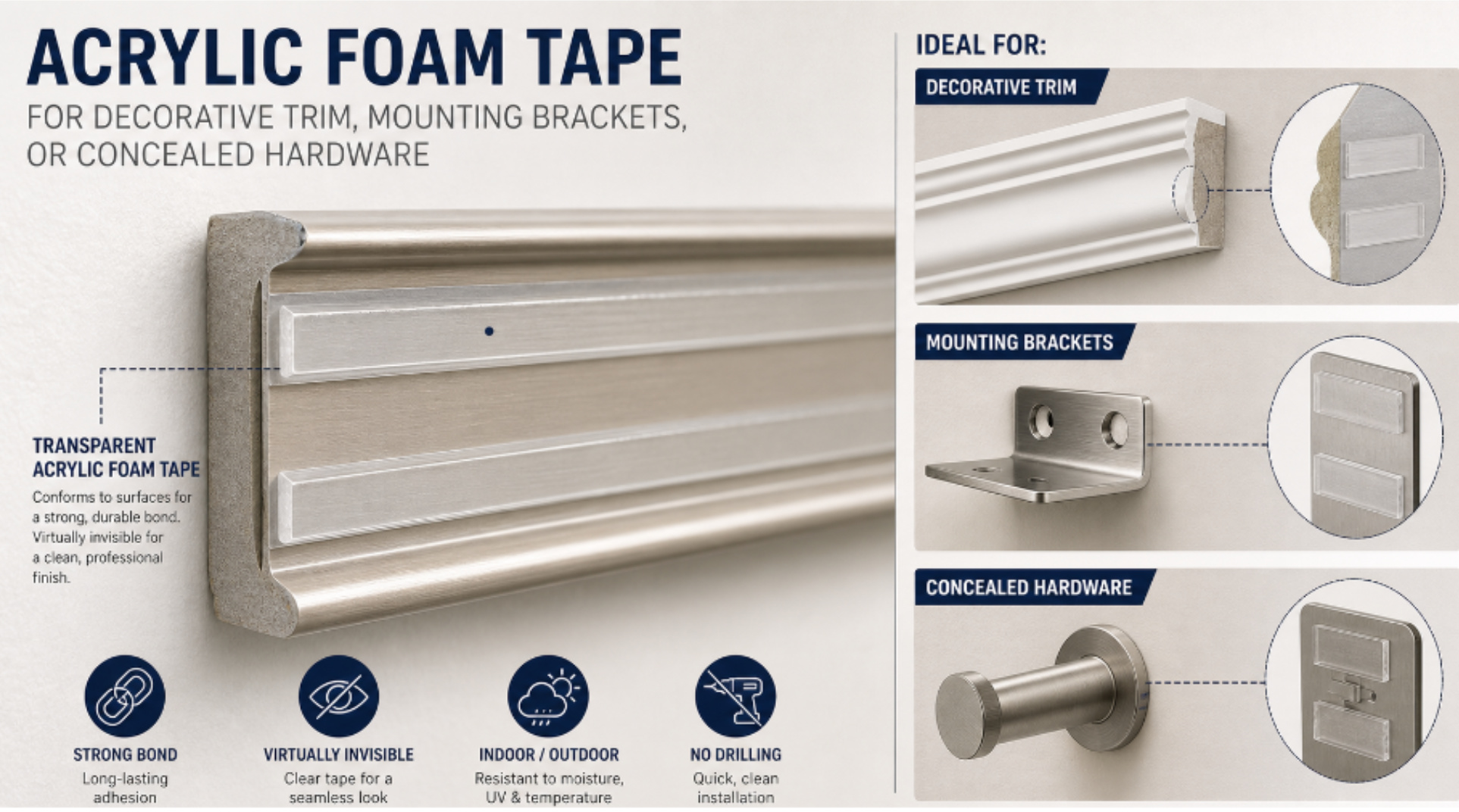
The adhesive system used in many clear acrylic foam tapes is specifically formulated to provide outstanding adhesion to transparent plastics, glass, painted metals, and numerous other substrates. In many applications, clear acrylic foam tape can replace screws, rivets, liquid adhesives, or mechanical clips while simplifying assembly and producing a cleaner finished product.
Whether you’re designing a new product, replacing mechanical fasteners, or looking for a more efficient manufacturing process, understanding how clear VHB tape performs can help you select the right material the first time.
What Is Clear VHB Tape?
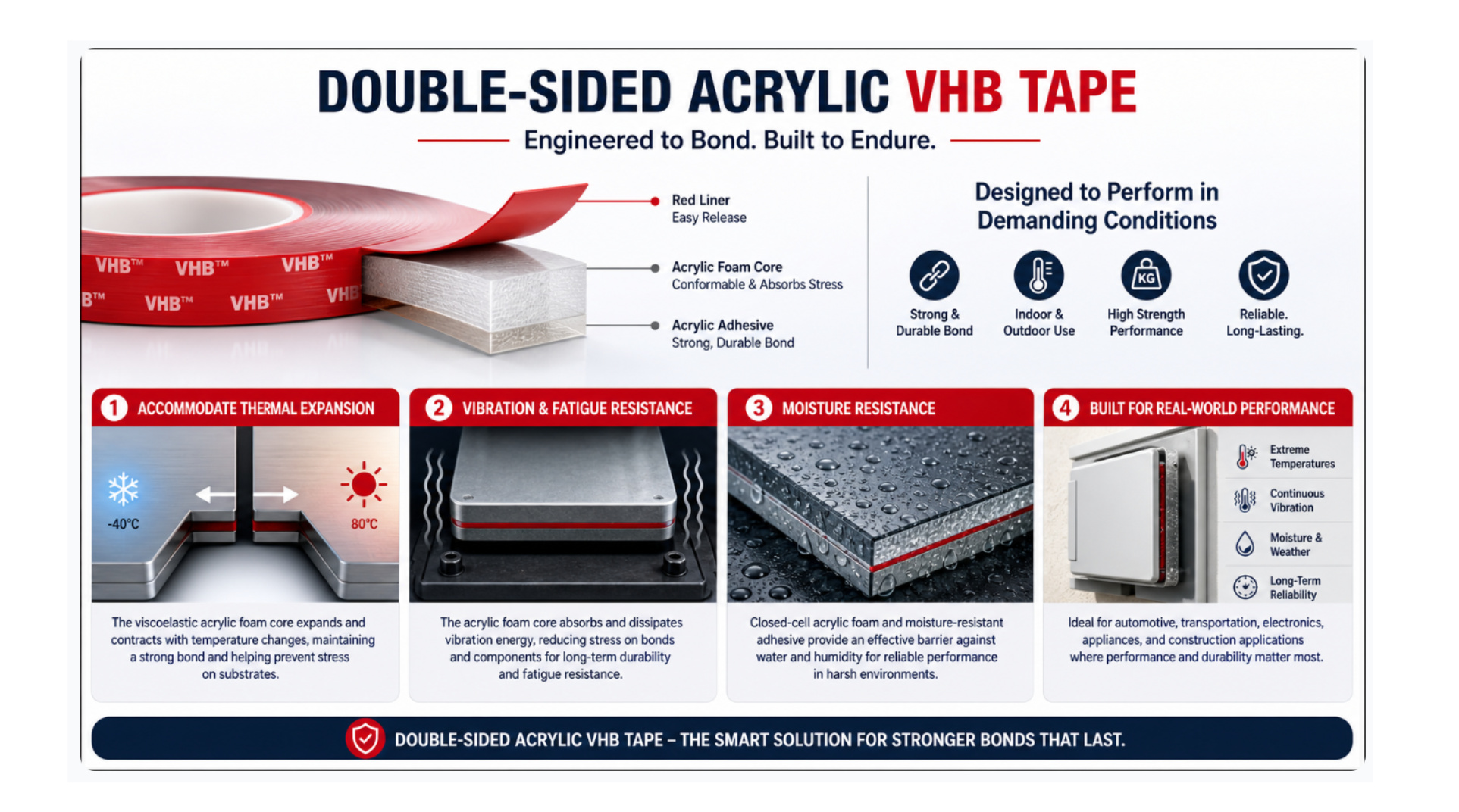
VHB™ (Very High Bond) is a trademark of 3M for its family of high-performance acrylic foam tapes. These tapes consist of a viscoelastic acrylic foam core coated on both sides with pressure-sensitive acrylic adhesive. Unlike conventional double-sided tapes that primarily rely on a thin adhesive layer, acrylic foam tapes combine adhesive chemistry with a resilient foam core that distributes stress across the bonded surfaces.
The result is an adhesive system capable of providing:
- Extremely high bond strength
- Excellent long-term outdoor durability
- Resistance to moisture and UV exposure
- Vibration damping
- Accommodation of thermal expansion and contraction
- A clean, nearly invisible bond line
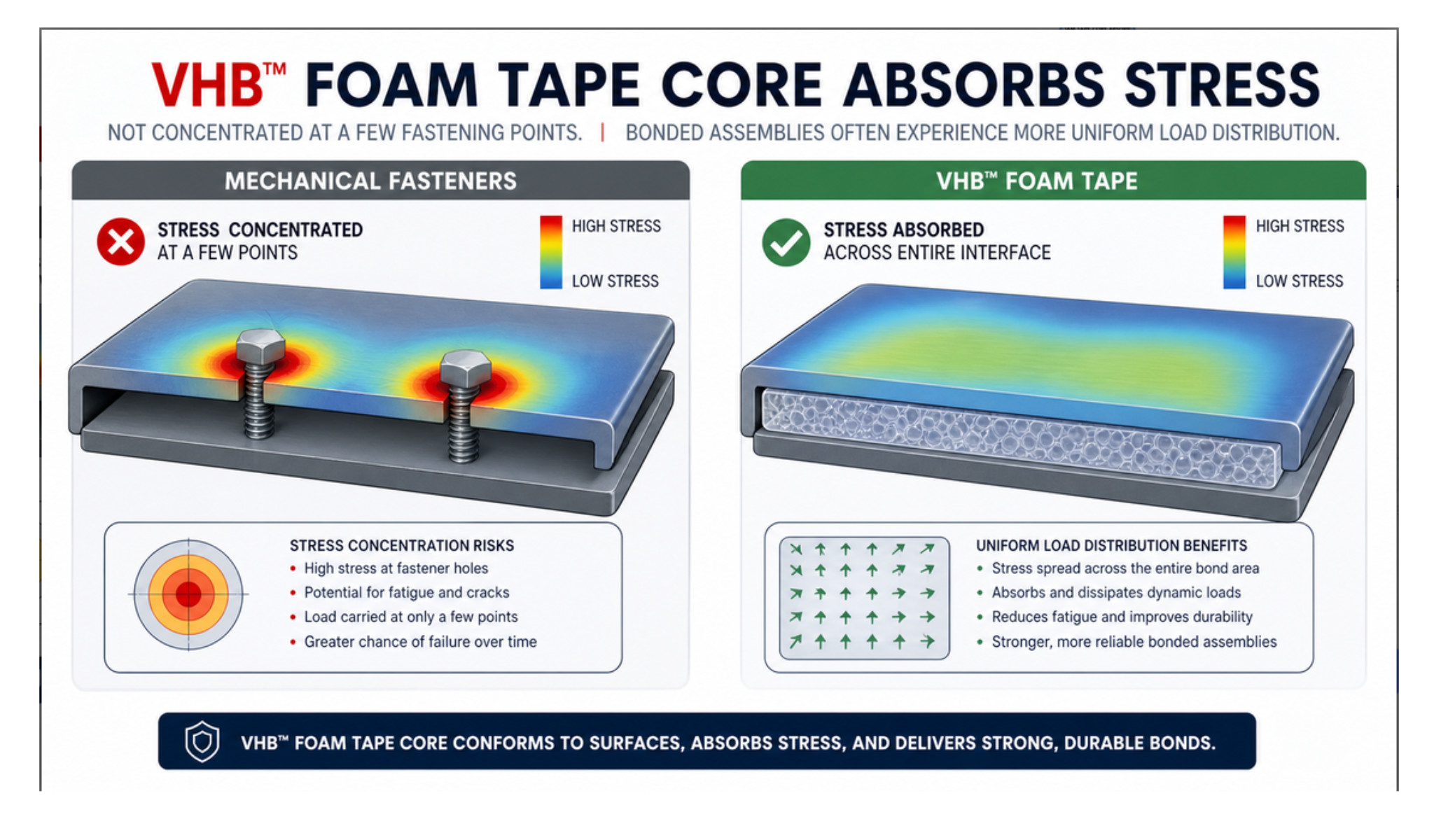
Because the foam core absorbs stress rather than concentrating it at a few fastening points, bonded assemblies often experience more uniform load distribution than traditional mechanical fasteners.
Why Engineers Choose Clear Acrylic Foam Tape
Every project has unique performance requirements. For some products, the primary goal is creating an attractive, seamless appearance. For others, long-term structural performance is the deciding factor.
Clear acrylic foam tape offers advantages in both areas.
Nearly Invisible Bond Lines
When bonding clear materials such as:
- Acrylic sheets
- Plexiglas® panels
- Polycarbonate (Lexan®)
- Tempered glass
- Decorative glass
- Retail display cases
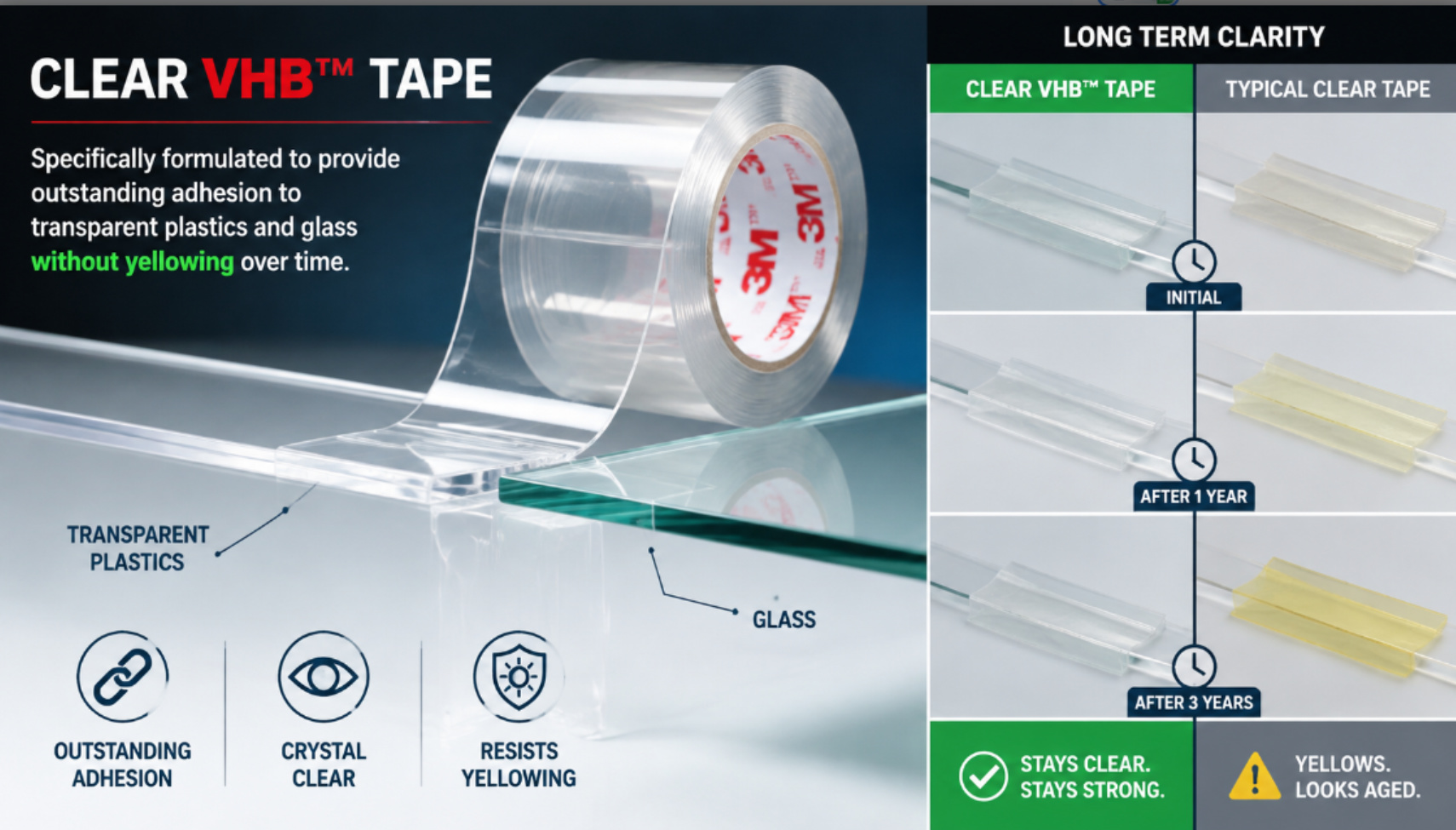
a transparent adhesive preserves the visual appearance of the finished assembly. The absence of visible gray or black foam creates a cleaner, more premium appearance.
This is particularly important in:
- Museum displays
- Retail fixtures
- Architectural glass
- Point-of-purchase displays
- Illuminated signage
- Consumer products
Eliminate Mechanical Fasteners
Many manufacturers are replacing screws, rivets, and welds with structural acrylic foam tapes because they can:
- Reduce assembly time
- Eliminate drilling operations
- Prevent corrosion around drilled holes
- Reduce product weight
- Improve product appearance
- Simplify manufacturing
For many assemblies, replacing multiple mechanical fasteners with a continuous adhesive bond also distributes stress more evenly across the bonded surfaces.
Bond Dissimilar Materials
Modern products frequently combine materials with different coefficients of thermal expansion.
Examples include:
- Aluminum bonded to acrylic
- Glass bonded to painted steel
- Polycarbonate bonded to aluminum
- Stainless steel bonded to composite panels
Rigid fastening methods may concentrate stress as these materials expand and contract with changing temperatures.
The viscoelastic foam core found in acrylic foam tapes helps absorb differential movement while maintaining a durable bond over extended service life.
Who Uses Clear VHB Tape?
Although many people associate VHB tape primarily with sign manufacturing, its applications extend across numerous industries.
Sign Manufacturing
Fabricators frequently use clear acrylic foam tapes for:
- Acrylic letters
- Channel letters
- Illuminated signs
- Backlit displays
- Interior signage
- Exterior signage
- Monument signs
The transparent adhesive allows sign components to appear as though they are floating while maintaining excellent outdoor durability.
Architectural Construction
Construction professionals use structural acrylic foam tapes for:
- Curtain wall systems
- Glass mounting
- Architectural panels
- Decorative trim
- Aluminum composite material (ACM) panels
- Rain screen systems
- Interior architectural features
The tape not only bonds components but also helps isolate vibration while accommodating expansion and contraction caused by changing temperatures.
Industrial Manufacturing
Manufacturers often specify clear acrylic foam tape for:
- Electronic enclosures
- Plastic housings
- Appliance components
- Decorative trim
- Instrument panels
- Equipment covers
- Plastic assemblies
Because the tape requires no curing time like many liquid adhesives, production can often move immediately to the next assembly step after application.
In Part 2,, we’ll explain why certain materials bond well, what engineers should consider during design, and how purchasing professionals can reduce project risk by selecting the proper tape.
Bonding Common Materials with Clear VHB™ Tape
One of the greatest advantages of clear acrylic foam tape is its ability to create durable, long-term bonds between many of the materials commonly used in modern manufacturing. From architectural glazing to retail displays and industrial equipment, these tapes have become a practical alternative to screws, rivets, welds, and liquid adhesives.
However, no single adhesive performs equally well on every material. Understanding the characteristics of the substrates being bonded is often the most important step in selecting the correct tape.
Below are some of the most common applications where clear VHB tape excels.
Bonding Acrylic Sheets
Acrylic (often sold under brand names such as Plexiglas®) is one of the most common materials bonded with clear acrylic foam tape.
Applications include:
- Acrylic display cases
- Retail fixtures
- Protective barriers
- Machine guards
- Museum displays
- Point-of-purchase displays
- Illuminated signs
Unlike mechanical fasteners that require drilling holes, clear VHB tape allows designers to create clean, uninterrupted surfaces. Eliminating drilled holes also helps reduce the risk of stress cracking that can occur in acrylic panels.
Because acrylic naturally expands and contracts with temperature changes, rigid fastening methods may place localized stress on the material. Acrylic foam tape distributes loads over the entire bonded area while allowing controlled movement between the two surfaces.
Typical searches include:
- tape for bonding acrylic sheets
- acrylic to acrylic adhesive tape
- acrylic panel mounting tape
- acrylic sign mounting tape
- tape for Plexiglas®
Bonding Glass
Glass presents unique challenges because it is smooth, rigid, and often highly visible. Any adhesive used in glass assemblies must provide long-term durability while remaining visually unobtrusive.
Clear acrylic foam tape is commonly used for:
- Glass display panels
- Architectural glazing
- Decorative glass
- Interior partitions
- Glass shelving
- Glass-to-metal assemblies
Many commercial interiors use structural acrylic foam tape to attach decorative trim, mounting brackets, or concealed hardware without visible fasteners.
Since clear tape blends with transparent materials, it allows designers to maintain a clean architectural appearance while providing reliable structural bonding.
Common searches include:
- glass mounting tape
- glass to metal bonding tape
- architectural glass bonding tape
- tape for glass panels
- double-sided tape for tempered glass
Bonding Polycarbonate (Lexan®)
Polycarbonate is frequently selected because of its exceptional impact resistance and toughness. It is widely used in:
- Machine guards
- Equipment enclosures
- Electronic housings
- Transportation components
- Safety glazing
- Industrial windows
Although polycarbonate is durable, it expands and contracts significantly with temperature changes. Mechanical fasteners may create stress concentrations that can eventually lead to cracking or distortion.
The viscoelastic foam core of acrylic foam tape helps absorb these dimensional changes while maintaining a continuous bond.
Common searches include:
- polycarbonate bonding tape
- tape for Lexan® panels
- clear tape for polycarbonate
- plastic to metal structural tape
- polycarbonate to aluminum tape
Bonding Aluminum
Aluminum remains one of the most common substrates used with acrylic foam tape because it combines lightweight construction with excellent corrosion resistance.
Applications include:
- Aluminum signs
- Equipment panels
- Architectural trim
- Vehicle components
- Aluminum composite material (ACM)
- Electronics
Clear VHB tape is particularly valuable when bonding aluminum to clear acrylic or glass because the transparent adhesive minimizes visual distraction.
Unlike screws or rivets, adhesive bonding also avoids drilling holes that may become corrosion points over time.
Stainless Steel and Painted Metals
Many industrial products combine stainless steel or painted metal with decorative plastic panels.
Examples include:
- Control panels
- Appliances
- Medical equipment
- Kiosks
- Electronic enclosures
Acrylic foam tape helps reduce vibration while providing a clean appearance without exposed fasteners.
Because the adhesive forms a continuous bond line rather than discrete attachment points, stresses are distributed more evenly across the assembly.
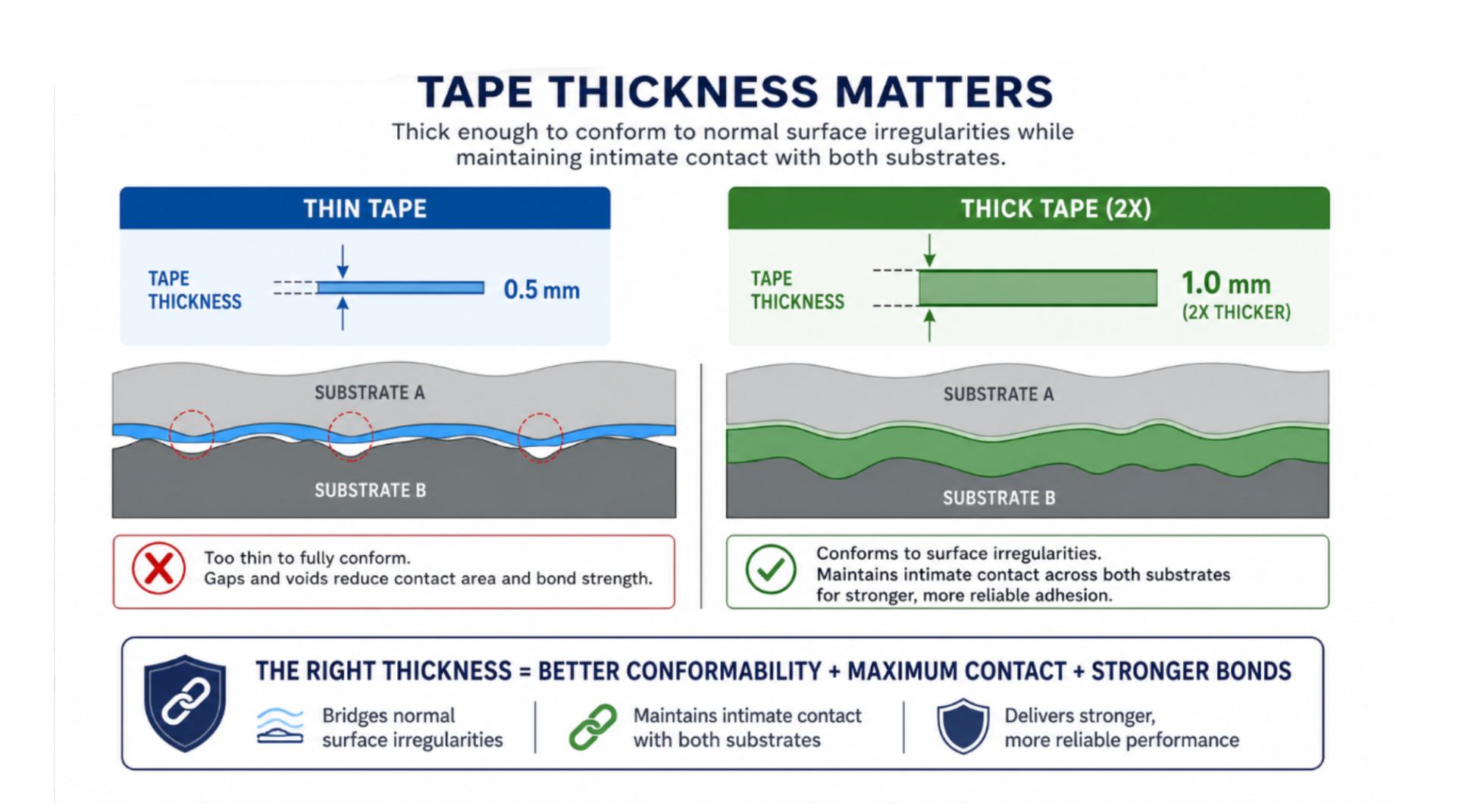
Choosing the Correct Tape Thickness
One of the most common questions engineers ask is:
“How thick should my acrylic foam tape be?”
Selecting the proper thickness is just as important as selecting the proper adhesive.
A thicker tape is not always better.
Instead, the tape should be thick enough to conform to normal surface irregularities while maintaining intimate contact with both substrates.
20 mil (0.020″) Clear VHB Tape
A 20 mil acrylic foam tape, such as 3M™ VHB™ 4905, is often selected when:
- Minimal bond line thickness is desired
- Surfaces are smooth and flat
- Tight component spacing is required
- Appearance is critical
- Lower material cost is preferred
Typical applications include:
- Display cases
- Plastic trim
- Small signs
- Electronics
- Decorative panels
Because less foam material is used, thinner tapes are generally more economical while still providing excellent structural performance on well-matched surfaces.
40 mil (0.040″) Clear VHB Tape
A 40 mil tape, such as 3M™ VHB™ 4910, is commonly chosen when:
- Surfaces are slightly irregular
- Small gaps must be accommodated
- Materials expand differently
- Additional stress absorption is desired
Typical applications include:
- Outdoor signage
- Architectural glazing
- ACM panels
- Polycarbonate assemblies
- Larger display systems
The thicker foam core provides greater conformability, allowing the adhesive to maintain intimate contact even when the substrates are not perfectly flat.
When Even Thicker Tape May Be Appropriate
Some assemblies benefit from acrylic foam tapes thicker than 40 mils.
Examples include:
- Textured powder-coated surfaces
- Rough composite panels
- Uneven painted metals
- Outdoor architectural assemblies
In these applications, additional foam thickness helps compensate for surface irregularities while maintaining full adhesive contact.
It is important to note, however, that tape thickness alone does not determine bond strength. Surface preparation, application pressure, dwell time, environmental conditions, and substrate compatibility all contribute to the long-term performance of the bond.
Design Tip
When choosing between two tape thicknesses, consider the surface finish of the materials being joined. Smooth, machined surfaces often perform well with thinner tapes, while textured, painted, or slightly uneven surfaces generally benefit from a thicker foam core that can conform to microscopic variations and maintain consistent contact across the bond area.
In Part 3, we’ll cover the engineering performance characteristics, UV resistance, weathering, vibration damping, thermal expansion, moisture resistance, and the best practices for surface preparation and application.
Outstanding UV and Weather Resistance
Outdoor applications expose bonded assemblies to some of the harshest conditions an adhesive will encounter. Ultraviolet (UV) radiation, rain, snow, humidity, and daily temperature cycling can cause many conventional adhesives to become brittle, discolor, or lose strength over time.
High-quality acrylic foam tapes are engineered for long-term outdoor exposure and are commonly specified for:
- Exterior architectural signage
- Building facades
- Glass curtain walls
- Outdoor displays
- Transportation equipment
- Solar and renewable energy components
Because the adhesive and foam core are acrylic-based, they offer excellent resistance to UV degradation compared with many rubber-based adhesive systems.
For projects expected to remain outdoors for many years, UV resistance should be considered one of the most important selection criteria.
Accommodates Thermal Expansion
Different materials expand and contract at different rates as temperatures change.
For example:
- Aluminum expands differently than acrylic.
- Glass behaves differently than polycarbonate.
- Painted steel expands differently than composite panels.
When these materials are joined with rigid fasteners, the resulting stresses are concentrated around screws or rivets. Over time, those localized stresses can contribute to cracking, distortion, fastener loosening, or fatigue.
The viscoelastic acrylic foam core acts as a flexible interface between the two materials. Rather than resisting movement completely, it absorbs and distributes stress across the entire bonded area.
This ability to accommodate differential thermal expansion is one of the primary reasons acrylic foam tapes are widely used in architectural glazing, transportation, and industrial equipment.
Vibration and Fatigue Resistance
Many assemblies experience constant vibration throughout their service life.
Examples include:
- HVAC equipment
- Industrial machinery
- Commercial vehicles
- Electronic enclosures
- Appliances
- Transportation systems
Mechanical fasteners concentrate loads at relatively small points. Repeated vibration can eventually loosen fasteners or create fatigue around drilled holes.
Acrylic foam tape behaves differently.
Because the adhesive forms a continuous bond over the entire joint, loads are distributed much more evenly. The foam core also helps dampen vibration before it is transmitted into the assembly.
This combination of stress distribution and vibration damping can contribute to improved long-term durability in many applications.
Moisture Resistance
Moisture can compromise some adhesive systems, particularly in outdoor or high-humidity environments.
Clear acrylic foam tapes are commonly used in applications where assemblies are exposed to:
- Rain
- Humidity
- Wash-down environments
- Condensation
- Temperature cycling
Although the tape itself is not intended to replace engineered weatherproof sealing systems in every application, the continuous adhesive layer can help reduce pathways for moisture intrusion compared with assemblies that rely on multiple mechanical fasteners.
For many products, this provides the added benefit of reducing potential corrosion around drilled holes.
High Peel and Shear Performance
When evaluating structural tapes, engineers often consider two important measures of performance:
Peel Strength
Peel strength describes the tape’s resistance to forces attempting to lift one substrate away from the other, beginning at an edge.
Applications with high peel loads include:
- Decorative trim
- Sign panels
- Plastic covers
- Exterior moldings
Properly selected acrylic foam tapes are designed to resist these forces over extended periods of service.
Shear Strength
Shear loads occur when one bonded surface attempts to slide parallel to the other.
Examples include:
- Wall-mounted panels
- Glass assemblies
- Equipment nameplates
- Architectural components
Acrylic foam tapes generally perform exceptionally well under shear loading because the adhesive bond is distributed over the entire contact area rather than concentrated at individual fasteners.
Impact Resistance
Many products experience occasional shock loads during shipping, installation, or everyday use.
Unlike rigid bonding methods, acrylic foam tape can absorb a portion of these impact forces through slight deformation of the foam core.
This energy absorption helps reduce stress concentrations that could otherwise damage brittle materials such as acrylic or glass.
Best Practices for Maximum Bond Strength
Even the highest-performing tape cannot compensate for poor application techniques. Proper preparation is essential for achieving reliable, long-term performance.
1. Clean the Surface Thoroughly
Dust, machining oils, mold-release agents, fingerprints, and other contaminants can reduce adhesive performance.
Before applying tape:
- Remove loose dirt and debris.
- Clean with an appropriate solvent recommended for the substrate.
- Allow the surface to dry completely before bonding.
Clean, dry surfaces promote better wet-out of the adhesive and improve long-term bond reliability.
2. Apply Firm Pressure
Pressure-sensitive adhesives require adequate application pressure to develop intimate contact with the bonding surface.
Using a hand roller or firm manual pressure helps eliminate trapped air and ensures the adhesive wets out across the entire surface.
Uniform pressure across the bond area generally produces more consistent results than light finger pressure alone.
3. Bond Within the Recommended Temperature Range
Application temperature can significantly influence adhesive performance during installation.
Very cold surfaces may reduce the adhesive’s ability to wet the substrate, while excessively hot surfaces can make alignment more difficult.
Whenever possible, apply tape within the manufacturer’s recommended installation temperature range, which is the application temperature and is almost always room temperature. The service temperature will show the high range and low rnge that a tape will effectively retain its bond. .
4. Allow Time for Bond Development
Although acrylic foam tape provides immediate handling strength, bond performance typically increases over time as the adhesive continues to flow into the microscopic surface texture of the substrates.
Depending on the application, the bond may continue to strengthen over the first several days after installation.
For critical structural assemblies, allowing adequate dwell time before placing the bond under maximum load is considered good engineering practice.
Common Design Mistakes to Avoid
Even experienced designers can overlook factors that affect adhesive performance. Keeping the following considerations in mind can improve long-term reliability:
- Selecting tape based only on thickness rather than substrate compatibility.
- Applying tape to dirty, oily, or dusty surfaces.
- Using insufficient application pressure.
- Ignoring differences in thermal expansion between bonded materials.
- Choosing a tape narrower than the load path requires.
- Assuming all acrylic foam tapes have identical adhesive formulations and performance characteristics.
Taking time to evaluate the complete application—not just the materials being joined—can help reduce field failures and improve product reliability.
In Part 4, we’ll bring everything together with a practical buyer’s guide that compares 20 mil versus 40 mil clear tapes, discusses 3M™ VHB™ 4905 and 4910 alongside equivalent alternatives, includes a material-selection table and FAQ section,
Choosing the Right Clear VHB™ Tape for Your Project
Every bonding application has its own requirements. The best tape for a retail display may not be the best choice for an exterior architectural panel or transportation component.
Before selecting a clear acrylic foam tape, consider the following questions:
- What materials are being bonded?
- Will the assembly be used indoors or outdoors?
- Is the surface smooth, painted, or textured?
- Will the bond experience vibration or impact?
- Does the design require a nearly invisible bond line?
- Are there significant temperature changes during service?
- Is minimizing weight or eliminating fasteners important?
Answering these questions early in the design process helps narrow the selection to the tape thickness and adhesive system best suited for the application.
Quick Selection Guide
Application | Recommended Tape Thickness | Why |
Acrylic display cases | 20 mil | Thin, nearly invisible bond line |
Retail signage | 20–40 mil | Depends on panel size and flatness |
Glass-to-metal assemblies | 40 mil | Better stress distribution |
Polycarbonate panels | 40 mil | Handles thermal expansion well |
Architectural glazing | 40 mil | Excellent outdoor durability |
Aluminum trim | 20–40 mil | Based on surface finish |
Electronics | 20 mil | Low-profile installation |
Textured painted panels | 40 mil or thicker | Conforms to surface irregularities |
Material Compatibility
The table below provides a general overview of how clear acrylic foam tape performs on common substrates. Actual performance depends on the specific tape, surface condition, and application requirements.
Material | Bonding Performance | Typical Applications |
Acrylic | Excellent | Displays, signs, barriers |
Glass | Excellent | Architectural glazing, displays |
Polycarbonate | Excellent | Machine guards, equipment |
Aluminum | Excellent* | Panels, trim, signage |
Stainless Steel | Excellent* | Equipment, appliances |
Painted Metals | Very Good * | Architectural panels |
ABS | Good* | Plastic housings |
PVC | Good* | Displays, trim |
*Grey or black VHB is better |
3M™ Clear VHB™ Tapes
Two of the most commonly specified transparent acrylic foam tapes are:
3M™ VHB™ 4905
Thickness: 20 mil (0.020″)
Often selected for:
- Plastic assemblies
- Clear displays
- Electronic devices
- Decorative trim
- Interior applications
- Thin bond lines
Advantages include:
- Nearly invisible appearance
- Lower profile
- Lower material usage
- Excellent clarity
3M™ VHB™ 4910
Thickness: 40 mil (0.040″)
Often selected for:
- Architectural glazing
- Outdoor signage
- Glass assemblies
- Polycarbonate panels
- Aluminum panels
- Larger structural bonds
Advantages include:
- Better gap filling
- Greater stress distribution
- Increased conformability
- Excellent outdoor durability
Frequently Asked Questions
Is clear VHB tape strong enough to replace screws?
In many applications, yes. Acrylic foam tape has been successfully used in architectural, transportation, electronics, and industrial manufacturing to replace mechanical fasteners. The suitability depends on the specific loads, substrates, and environmental conditions. Grey or black VHB tape may be a better option if you are replacing fasteners on metal products.
Does clear tape turn yellow outdoors?
High-quality acrylic foam tapes are formulated for long-term outdoor exposure and are significantly more resistant to yellowing than many general-purpose adhesive systems. Environmental conditions and the specific tape formulation can influence long-term appearance.
Can clear VHB tape bond different materials together?
Yes. One of its greatest strengths is bonding dissimilar materials such as:
- Acrylic to aluminum
- Glass to steel
- Polycarbonate to aluminum
- Plastic to painted metal
- Composite panels to aluminum frames
The viscoelastic foam core helps accommodate the different rates at which these materials expand and contract.
Does thicker tape create a stronger bond?
Not necessarily.
A thicker tape primarily improves conformability and the ability to accommodate surface irregularities or differential movement. Bond strength depends on many factors, including substrate compatibility, surface preparation, tape width, bond area, and the type of load applied.
Can clear VHB tape be die cut?
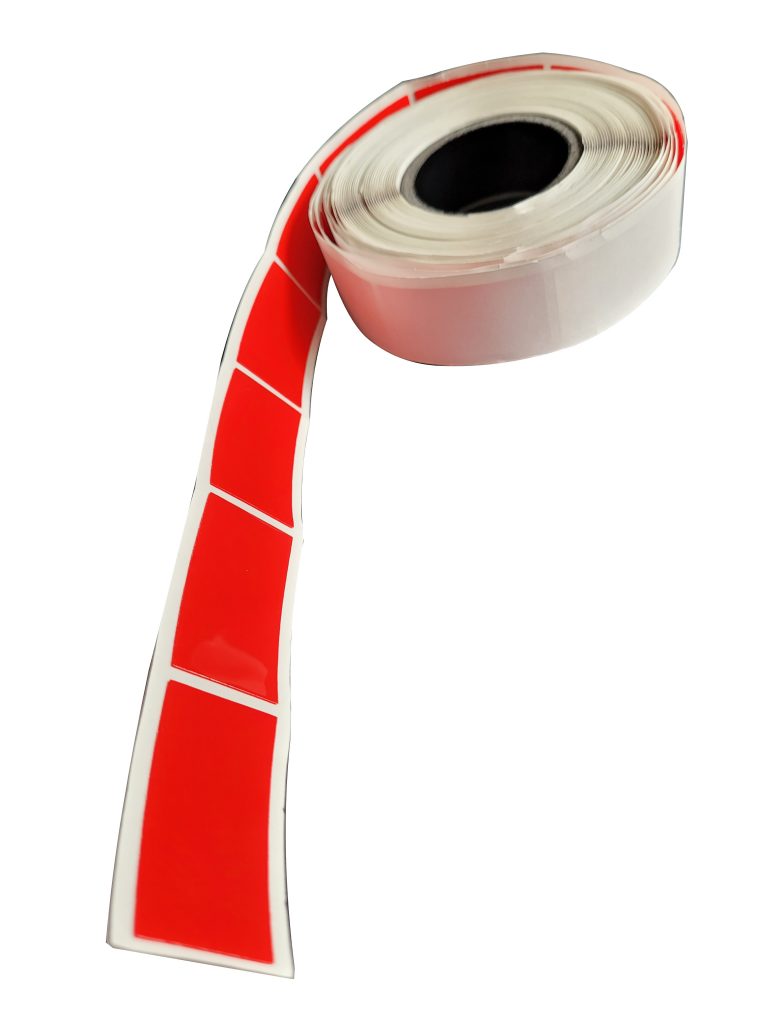
Yes. Acrylic foam tapes can be converted into precision die-cut parts, kiss-cut rolls, strips, and custom shapes for automated or high-volume assembly.
Custom die-cut parts can:
- Reduce labor
- Improve placement accuracy
- Increase manufacturing efficiency
- Minimize material waste
- Support automated assembly processes
Are There Alternatives to 3M™ VHB™ Tape?
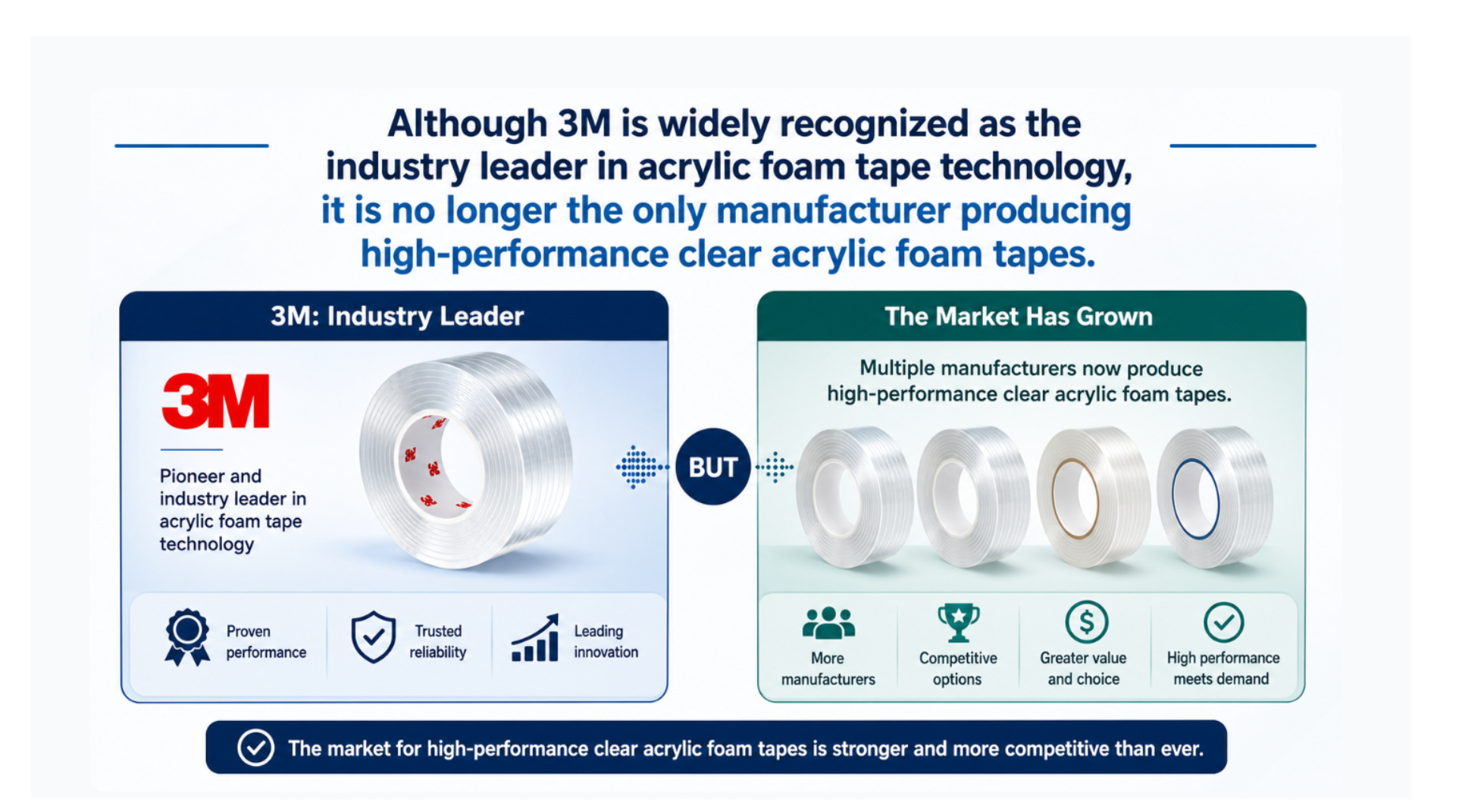
Although 3M is widely recognized as the industry leader in acrylic foam tape technology, it is no longer the only manufacturer producing high-performance clear acrylic foam tapes, particularly with popular VHB products like 3M 4910 and 4905.
Several manufacturers now offer products designed for applications similar to popular tapes such as 3M™ VHB™ 4905 and 3M™ VHB™ 4910.
For many applications, these alternatives may provide:
- Reduced material costs
- Comparable acrylic foam construction
- Similar thickness options
- Excellent weather resistance
- Strong adhesion to common substrates
However, when evaluating alternative products, it is important to compare more than price alone. Ask your tape supplier for data sheet and see how well the numbers match up.
Purchasing professionals and engineers should review:
- Adhesive chemistry
- Long-term aging performance
- UV resistance
- Temperature performance
- Independent testing data
- Available technical support
- Product consistency
- Supply chain reliability
A lower purchase price may not represent the lowest total cost if an adhesive fails prematurely or requires additional processing during manufacturing.
Why Work with an Experienced Tape Converter?
Choosing the right tape is only part of the solution. An experienced converter can help optimize both product performance and manufacturing efficiency.
A knowledgeable converter can provide:
- Assistance selecting the best adhesive for your substrates
- Custom slit widths
- Precision die-cut components
- Prototype quantities for evaluation
- High-volume production
- Material recommendations based on your application
- Technical support throughout product development
Whether you’re designing a new product or replacing an existing bonding method, early collaboration with a converter can help avoid costly redesigns and improve production efficiency.
Conclusion
Clear acrylic foam tape has become one of the most versatile bonding solutions available to engineers, product designers, and manufacturers. By combining exceptional bond strength with a nearly invisible appearance, it enables products that are both aesthetically pleasing and mechanically durable.
From acrylic displays and architectural glazing to industrial equipment and transportation components, clear VHB™ tapes help manufacturers eliminate mechanical fasteners, reduce assembly time, absorb vibration, and create cleaner, more modern designs.
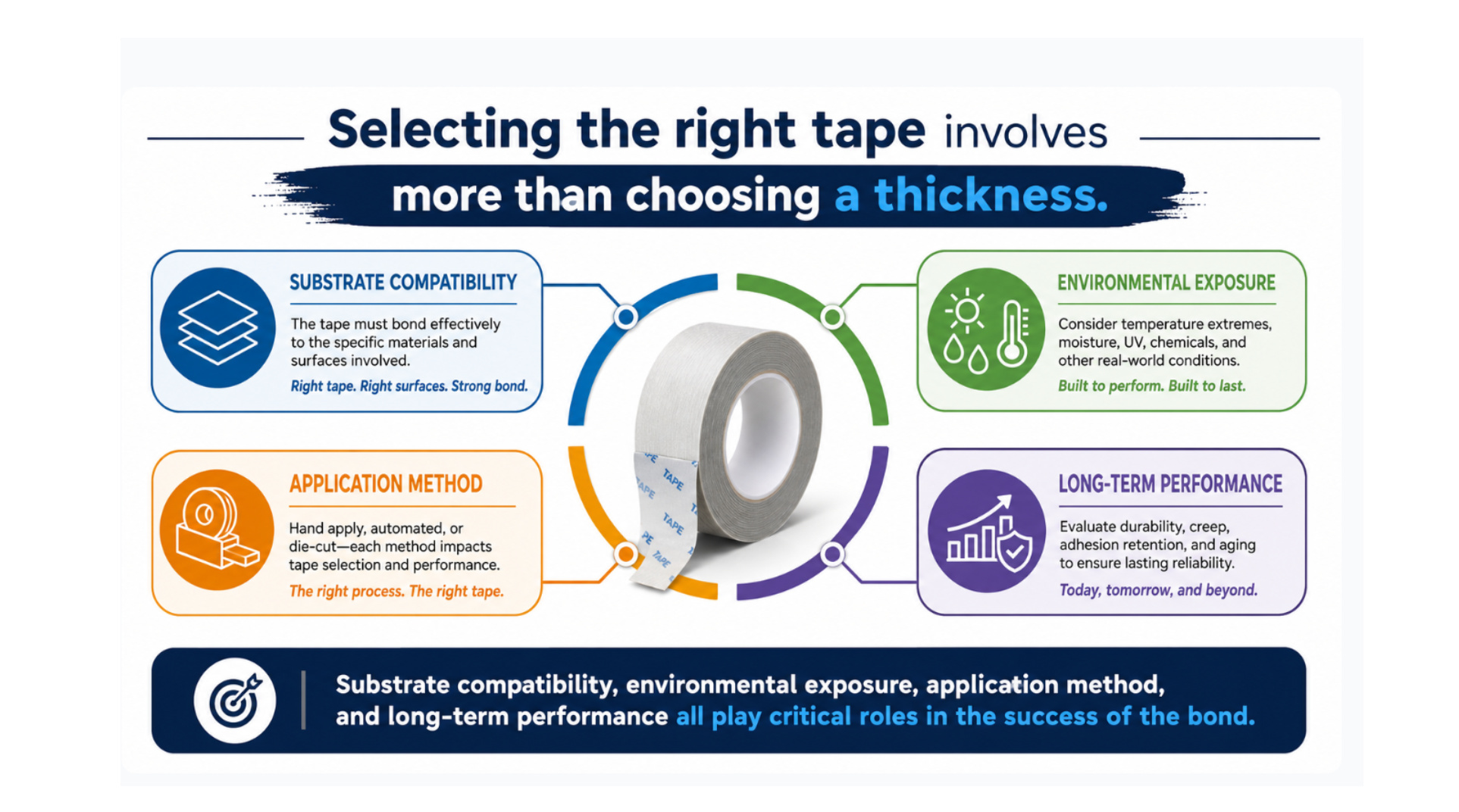
Selecting the right tape involves more than choosing a thickness. Substrate compatibility, environmental exposure, application method, and long-term performance all play critical roles in the success of the bond.
If you’re evaluating a new project or looking for a cost-effective alternative to traditional fastening methods, working with an experienced adhesive specialist can help you identify the best solution for your specific requirements.
Need help selecting the right clear acrylic foam tape? Our team can recommend the best product based on your substrates, environmental conditions, and performance requirements. We also offer custom slit rolls, precision die-cut parts, and prototype quantities to help move your project from concept to production.
Wondering if transparent VHB is really the best option for your project? Check this brif artcle “Which is the Best VHB for Your Project?”