Double-sided tapes are available in a wide range of thicknesses. The thinnest constructions can be as little as 2 mils (0.05 mm), while specialty products can exceed 1 inch (25 mm) in thickness. Terms such as double-sided tape, double-coated tape, and two-sided adhesive tape are often used interchangeably. However, these products should not be confused with transfer tapes (also called unsupported tapes).
Although both tape types feature adhesive on both sides, double-sided tapes contain a supporting carrier or substrate between the adhesive layers. The most common carrier materials are polyester (PET) film, foam, tissue, and nonwoven materials. Transfer tapes, by contrast, consist only of adhesive and a release liner, with no carrier.
What Is Considered a Thick Double-Sided Tape?
In industrial applications, double-sided tapes are generally considered “thick” when they reach 1 mm (40 mils) or greater, excluding the release liner. Thick tapes are commonly selected for two reasons:
- Gap filling between uneven or irregular surfaces.
- Stand-off creation, where the tape contributes to the overall height of the assembled product.
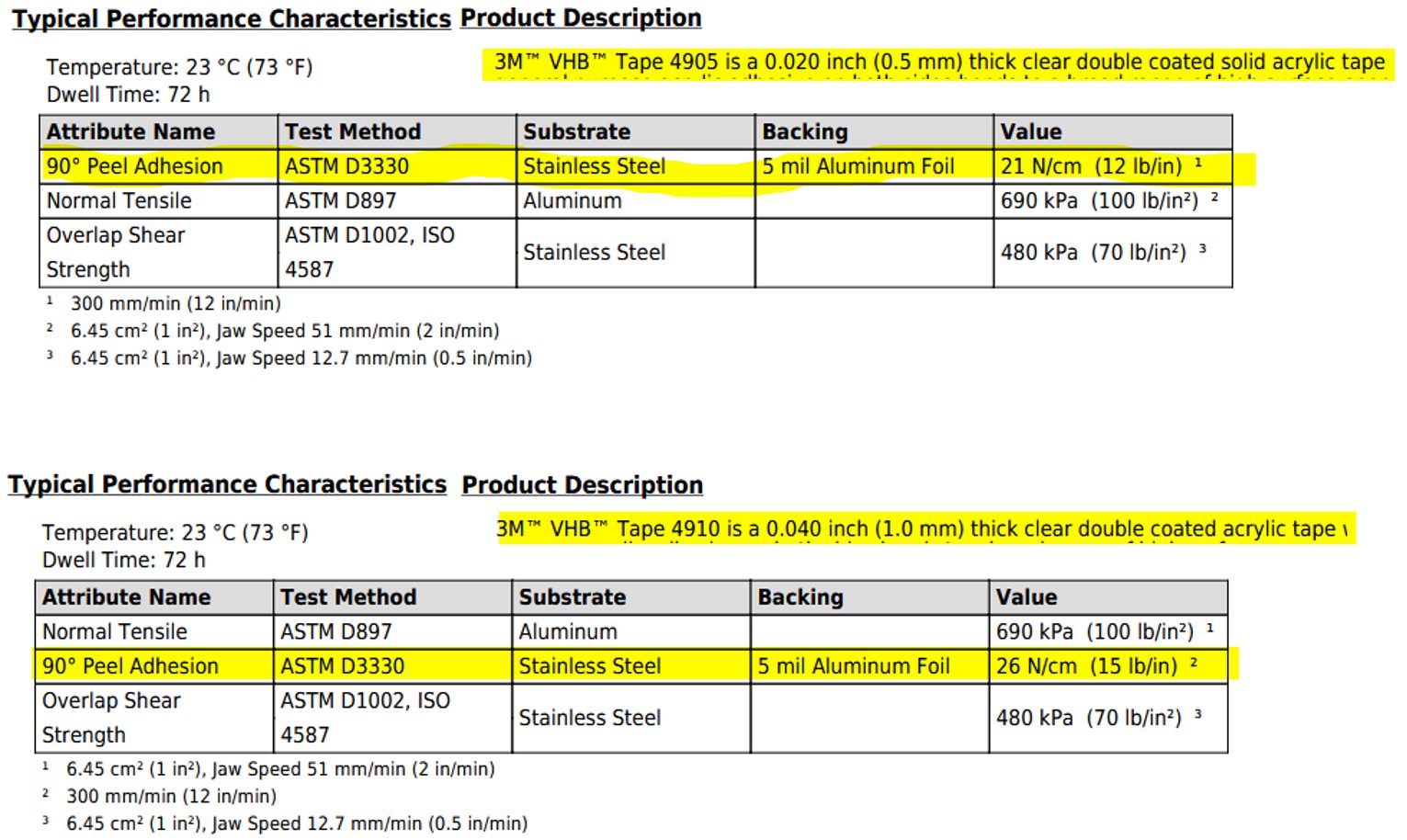
In many cases, increased tape thickness can also improve bond performance. This is particularly true for acrylic foam tapes such as VHB™ products. A thicker tape can absorb more stress, accommodate differential thermal expansion, and provide greater surface contact. For example, a 1.0 mm VHB tape may deliver approximately 20% higher peel strength than a comparable 0.5 mm construction, depending on the specific product series and test conditions.
Understanding Thick Tape Construction
A common misconception is that a 1 mm thick tape consists of a single 1 mm layer of adhesive. In reality, most thick double-sided tapes are engineered constructions made up of multiple layers.
The adhesive thickness can vary on each side of the tape depending on the application requirements. For example, a 1 mm tape may contain:
- 0.025 mm (1 mil) of adhesive on the liner side
- 0.038 mm (1.5 mil) of adhesive on the exposed side
- Approximately 0.94 mm of carrier material
This layered construction allows manufacturers to optimize bonding performance for different substrates while maintaining the desired overall thickness.
The Most Common 1 mm Foam Tape Types
Most double-sided tapes in the 1 mm thickness range belong to the foam tape category. The two most common constructions are acrylic foam and polyethylene (PE) foam.
Acrylic Foam Tapes (VHB)
Acrylic foam tapes are best known through the VHB (Very High Bond) category. These tapes utilize an acrylic foam core combined with acrylic adhesive systems throughout the construction.
Key advantages include:
- Exceptional bond strength
- Excellent durability and weather resistance
- Strong performance on metals, glass, and many plastics
- Ability to replace mechanical fasteners in some applications
Because of their high strength and long-term durability, 1 mm VHB tapes are frequently specified in metal fabrication, architectural assemblies, transportation, electronics, and industrial equipment applications.
For substrate compatibility:
- Black and gray VHB tapes are commonly used for metals and many opaque plastics.
- Clear VHB tapes are often preferred for glass, transparent plastics, and applications where bond-line visibility is important.
PE Foam Tapes
PE foam tapes, particularly those made from cross-linked polyethylene foam, represent another major category of thick double-sided tapes. These products are available with either acrylic or rubber-based adhesive systems.
Compared with VHB tapes, PE foam tapes typically offer:
- Lower cost
- Greater versatility across a wider range of substrates
- Good cushioning and gap-filling properties
- Strong adhesion to low-density and porous materials
One example is the retail display industry, where PE foam tapes are widely used for mounting corrugated cardboard displays. PE foam tapes generally bond more effectively to corrugated materials than VHB tapes while offering a substantially lower material cost.
Common Applications for 1 mm Double-Sided Tapes
A 1 mm thick double-sided tape is often selected when engineers need a combination of bonding strength, gap filling, and assembly simplification. Typical applications include:
- Metal panel bonding
- Decorative trim attachment
- Glass and transparent plastic mounting
- Sign and display assembly
- Point-of-purchase (POP) displays
- Appliance manufacturing
- Electronics assembly
- Automotive trim and component attachment
- Vibration damping and cushioning
The ability to conform to surface irregularities while maintaining a strong bond makes 1 mm foam tapes a versatile solution across many industrial markets.
Conclusion
While double-sided tapes are available in many thicknesses, 1 mm constructions represent an important category for industrial bonding applications. Whether using acrylic foam (VHB) or PE foam technologies, these thicker tapes provide benefits that thinner constructions cannot, including gap filling, stress distribution, improved peel performance, and simplified assembly. Selecting the right tape depends on the substrates involved, environmental conditions, performance requirements, and cost objectives.