. Electronics & Electrical Manufacturing
Used for bonding graphic overlays, metal foil lamination, circuit assemblies, and components where reliable adhesion and environmental resistance are vital. These tapes’ excellent shear strength and temperature performance make them suitable for electronics assembly.
- Automotive & Transportation
Used in automotive interior/exterior trim, nameplates, instrument panels, membrane switch bonding, and sensors. Their high temperature and moisture resistance suit transportation applications. - Aerospace & Defense
Used for nameplates, overlays, switch bonding, and components exposed to demanding conditions. The tapes’ performance under heat, humidity, and solvents supports aerospace durability requirements. - Signage, Graphics & Display Fabrication
Common in sign making, graphic laminating, decal finishing, and point-of-purchase displays since they provide clean permanent bonds and work well in die-cutting/graphic applications. - Appliances & Consumer Goods Manufacturing
Used in appliance panels, nameplates, control overlays, decorative trim and assembly where strong, neat joints are needed without mechanical fasteners. - General Industrial & Metalworking
Used for bonding metal parts, laminating plastics to metal, and industrial joining applications (e.g., sheet goods, labels, protective films). Their robust performance and broad substrate compatibility make them versatile in many industrial assembly tasks. - Furniture & Specialty Fabrication
Used in furniture assembly, display fabrication, and nameplate attachment where strong, invisible adhesion is desirable.
📌 Notes on Differences in Application
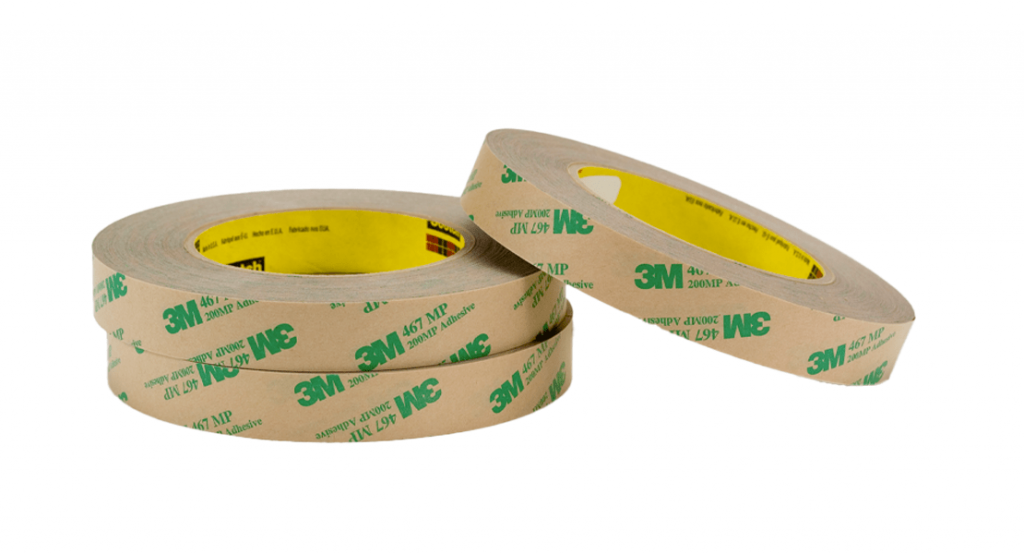
- 467MP (thinner adhesive layer) is often chosen for smooth surfaces or where minimal adhesive thickness is preferred.
468MP (thicker adhesive layer) is better for textured or irregular surfaces, offering increased contact and bond strength
🧠 Why These Industries Use Them
Performance advantages of both tapes include:
- Very high shear and peel strength on metals and high surface energy plastics.
- Resistances to heat (up to ~400 °F/204 °C short-term), humidity, solvents and aging.
- Temporary repositionability during assembly helps accurate placement before final bonding.