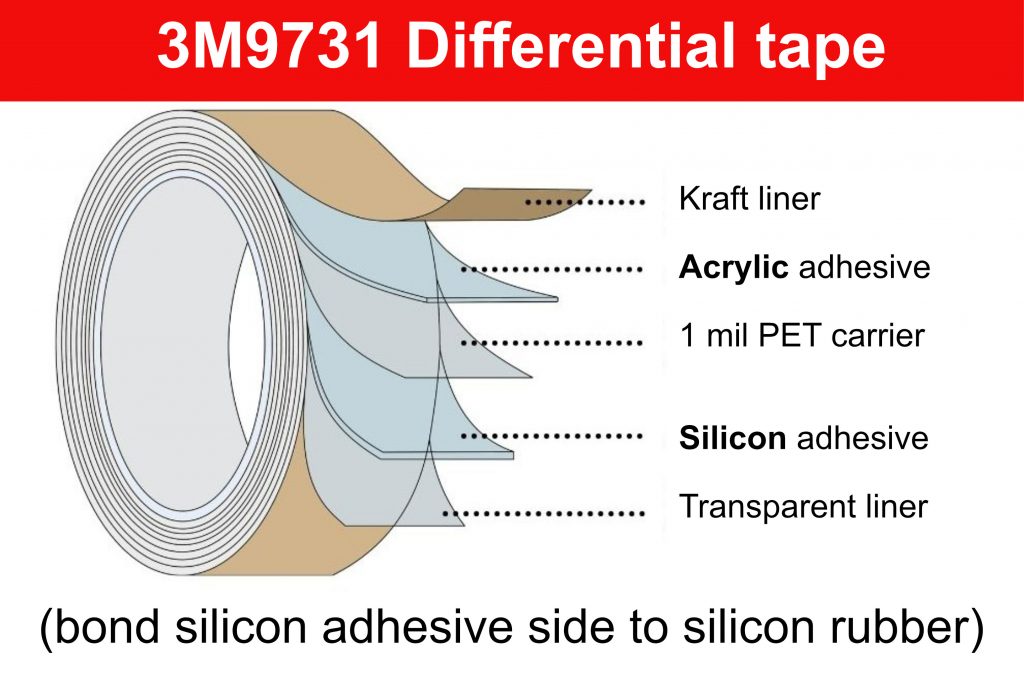
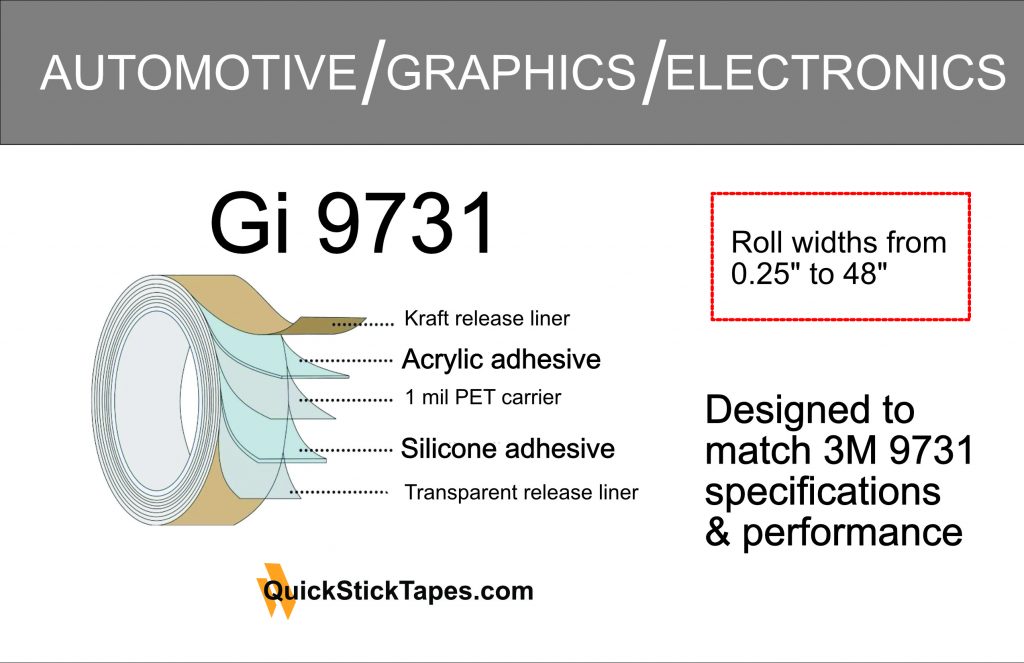
Silicone adhesive tapes are widely used to bond silicone rubber and silicone-based substrates in medical devices, electronics, wearables, and industrial assemblies. Regardless of whether the silicone material is produced through extrusion, calendaring, or molding, one reality remains consistent:
The only pressure-sensitive adhesive (PSA) that reliably bonds to silicone rubber is a silicone-based adhesive tape.
However, successful bonding is not determined by adhesive chemistry alone.
In real-world applications, the type and direction of mechanical forces applied to the bond play a critical role in whether a silicone tape performs reliably—or fails prematurely. In practice, silicone adhesive tape can show impressive holding power in certain load scenarios while performing poorly in others.
The determining factor is not simply bond strength, but how force is applied to the bonded interface.
Understanding Stress Angles in Real-World Applications
The most important question when evaluating silicone tape performance is:
Where will stress be applied, and at what angle will force be transferred into the bond line?
Most real-world applications experience one or more of the following force types:
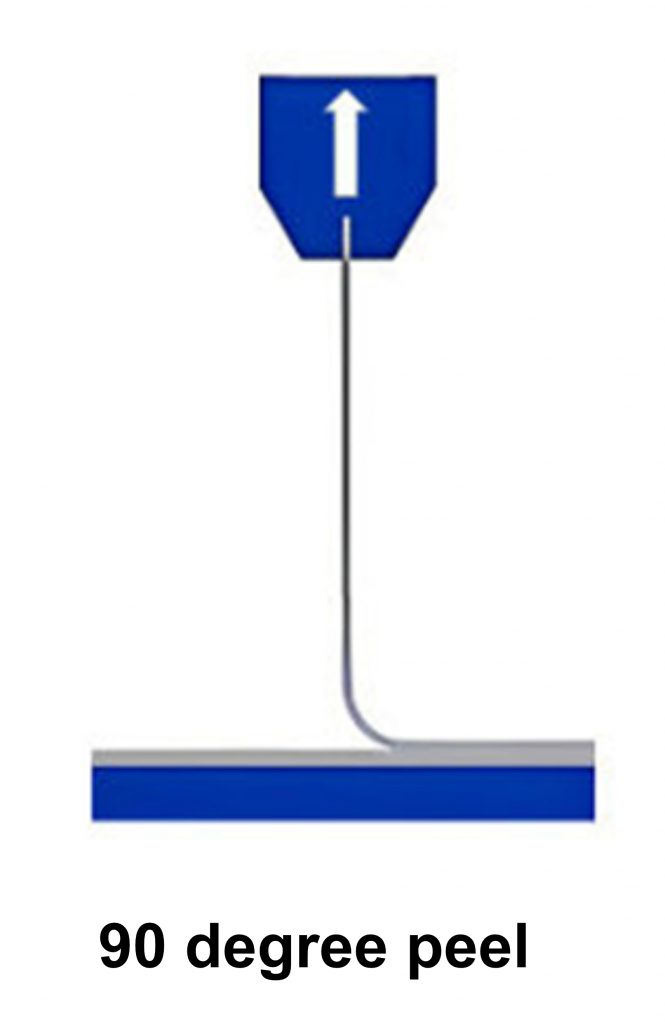
90-Degree Peel Force
Force is applied perpendicular to the bond line.
Example: A 1″ × 12″ strip of tape hanging vertically from a ceiling. Pulling downward on the free end creates a 90° peel force that attempts to lift the adhesive away from the substrate.
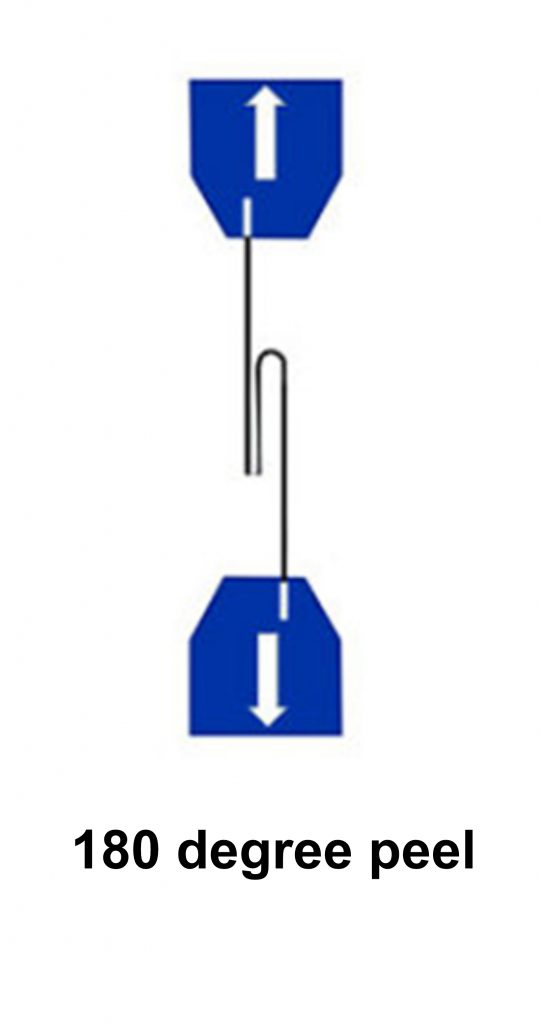
180-Degree Peel Force
Force occurs when the bonded material is folded back onto itself.
Examples: Removing a bandage from skin or pulling a tab to open a sealed package.
T-Peel (Tensile Force)
Force is applied by pulling two bonded substrates in opposite directions.
Example: Pulling apart the sealed top of a chip bag.
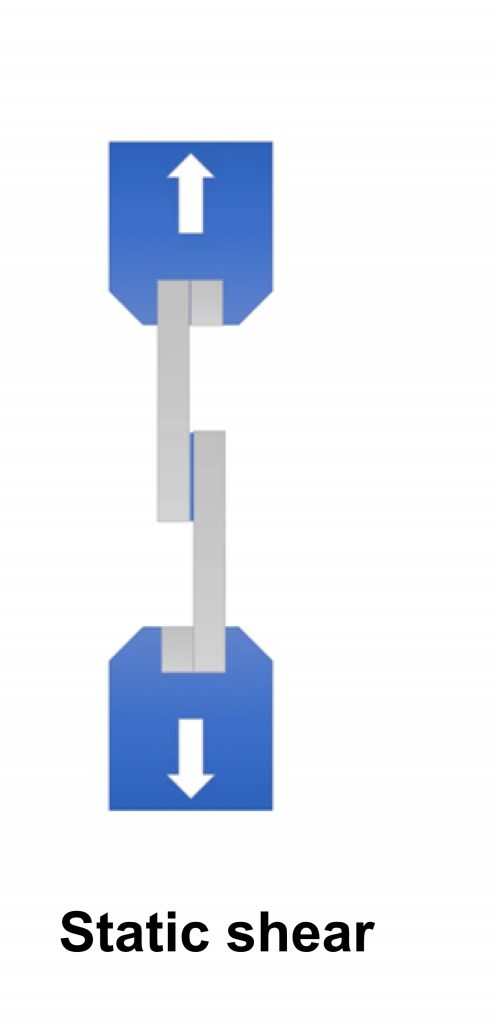
Static Shear Force
Shear forces act parallel to the bond line, creating a sliding load rather than a peeling load.
Examples: Hanging a picture frame or the weight load applied to a medical ostomy bag.
Unlike peel forces, shear forces apply constant load over time, often with minor material deformation.
Where Silicone Adhesive Performs Best
When bonding silicone adhesive tape to silicone rubber substrates, performance varies significantly by force type:
This distinction is critical because standard adhesive data sheets do not reflect real-world silicone-to-silicone bonding conditions.
Limitations of Standardized Testing Data
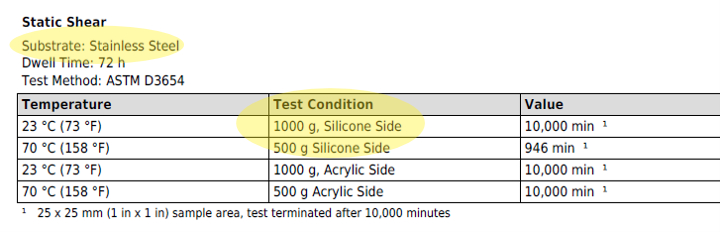
Engineers, product managers, and sourcing teams often rely on technical data sheets to evaluate adhesive strength, compare alternatives, or validate design decisions. However, most adhesive testing is performed on stainless steel substrates (typically 302 or 304 stainless).
This creates a fundamental problem:
Data generated on stainless steel does not translate reliably to silicone, rubber, plastics, foams, or low-surface-energy materials.
Real-World Example
If you compare a Very High Bond (VHB) tape to a packaging bag-sealing tape using only data sheets, the VHB tape will appear dramatically stronger. Based on this data, you might choose VHB tape to seal a polypropylene bag to achieve the strongest possible seal.
In practice, the result is the opposite: The VHB tape performs poorly because polypropylene is a low-surface-energy substrate.
Conclusion: Technical data sheets are useful for baseline comparison, but they are not predictive of real-world performance unless testing is conducted on:
The actual substrate
The actual surface condition
The actual force direction
The actual loading type
The actual environment
There is no substitute for application-specific testing.
Our Shear Testing Methodology
To evaluate real-world performance, we conducted static shear testing on silicone adhesive tape bonded to silicone rubber substrates.
Test Protocol
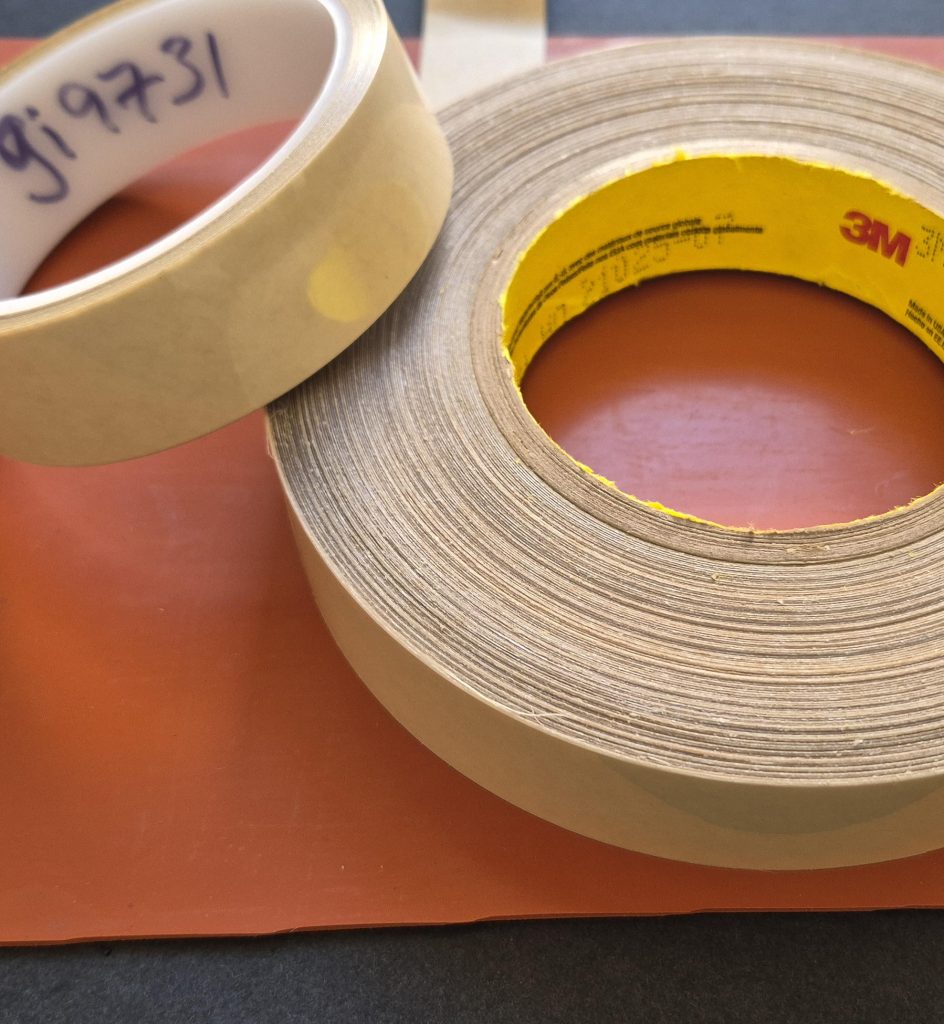
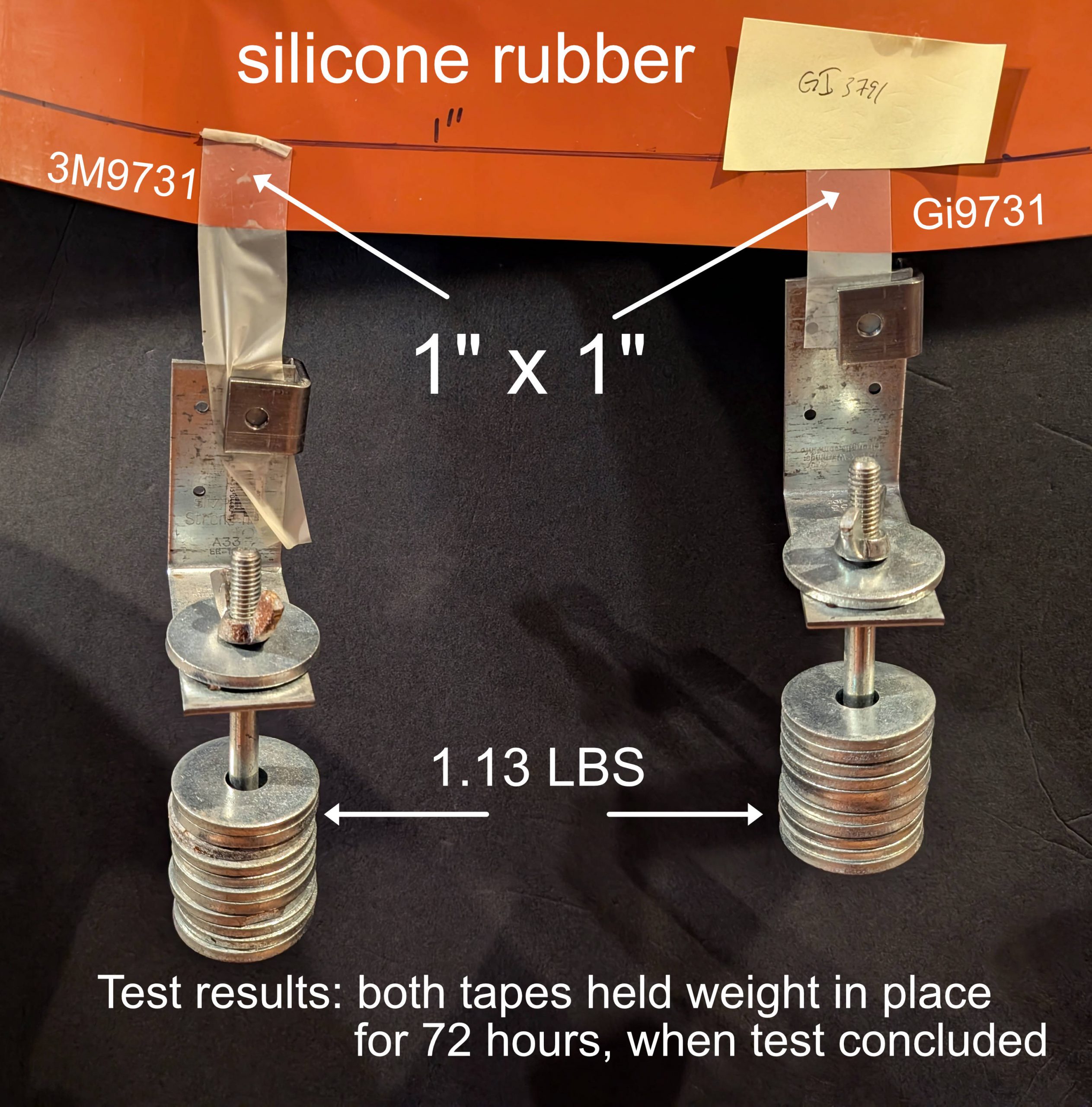
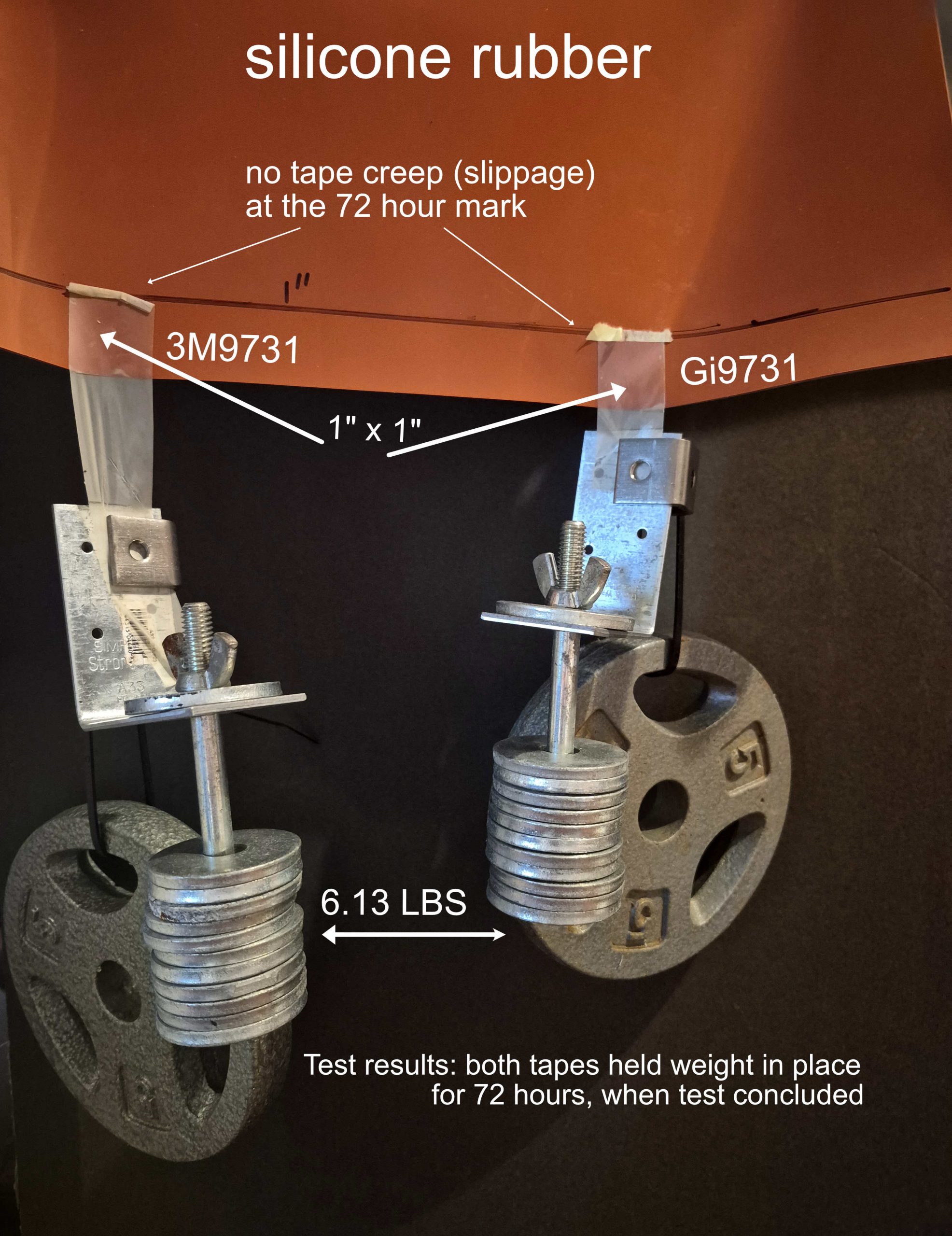
Tapes used: 3M 9731 and generic version Gi 9731 as a control
5 lb application pressure on 1″x1″ tape
24-hour dwell time before loading
Incremental weight loading
Each load stage held for 72 hours
Testing continued beyond 72 hours if slippage observed
Results for static shear
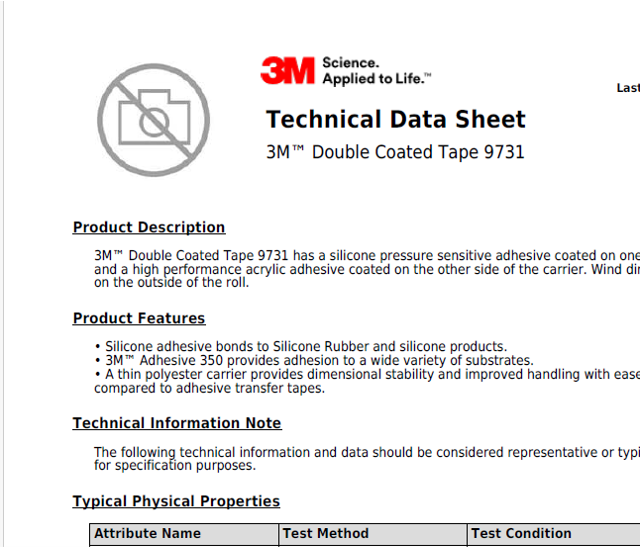
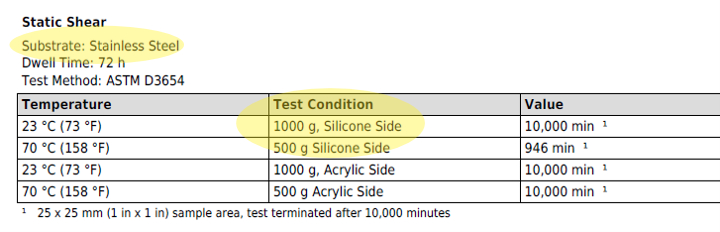
For reference, the 3M data sheet for 3M 9731 for shear performance was tested on stainless steel substrate. 1000 grams for 10,000 minutes, or 2.2 lbs per square inch for 167 hours
Results:
1.13 lbs per square inch: Held beyond 72 hours, no slippage
6.13 lbs per square inch: Held beyond 72 hours, no slippage
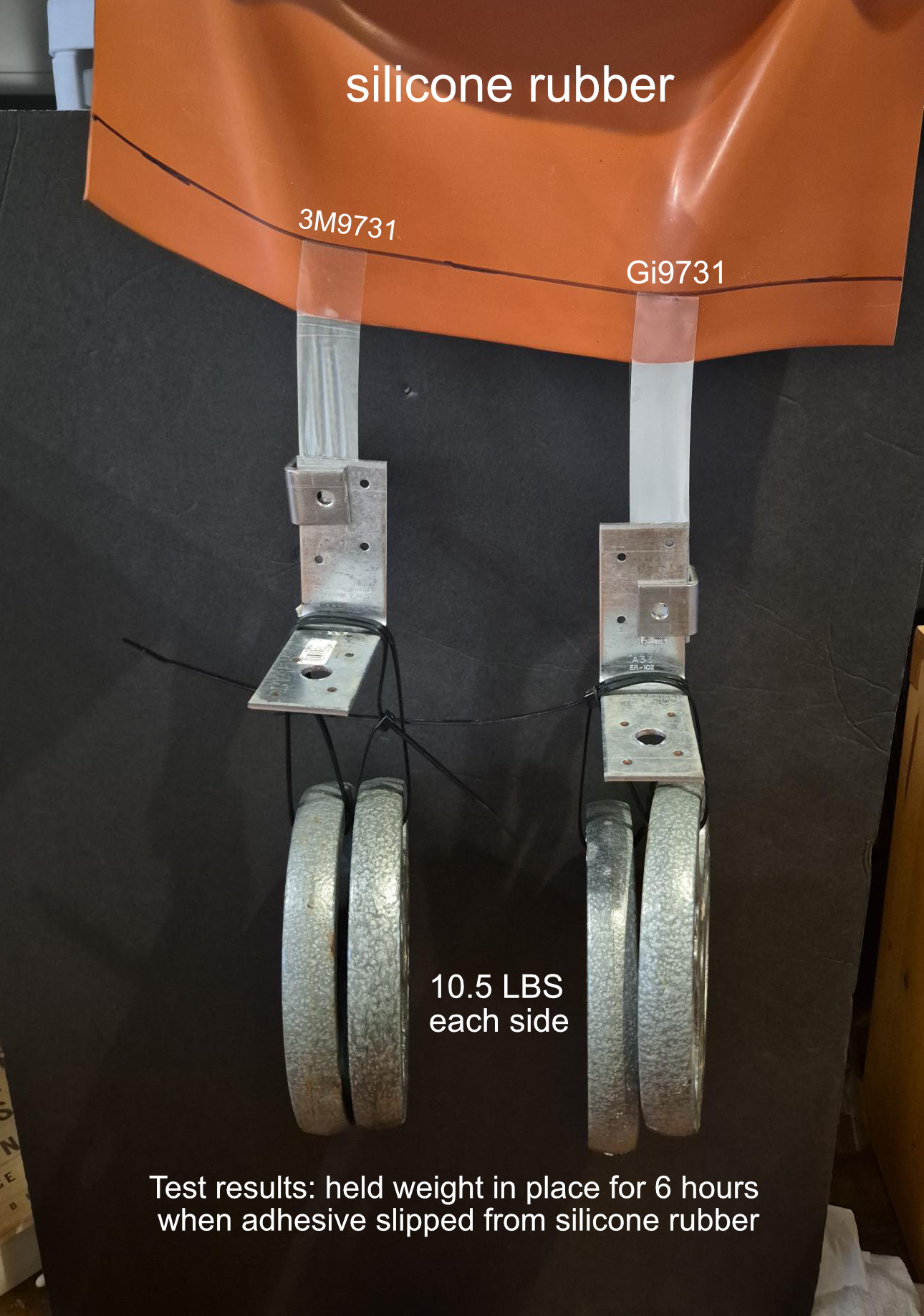
10.5 lbs per square inch: silicone adhesive
Released from silicone rubber at 6 hours
These results indicate strong shear performance for silicone adhesive on silicone substrates.
90-Degree Peel Testing Results
Since standard data does not provide silicone-on-silicone 90° peel performance, we conducted additional testing:
1.13 lbs per square inch: Bond failure at 45 minutes
0.50 lbs per square inch: Held beyond 72 hours, no slippage
This confirms that 90-degree peel loading represents the weakest performance scenario for silicone adhesive tape on silicone rubber.
Conclusions & Application Guidance
Based on testing and real-world behavior:
Static shear loading provides the strongest and most reliable bonding for silicone adhesive tape on silicone rubber.
180-degree peel loading offers moderate performance and may be suitable for applications under approximately 3.44 lbs/in² of force.
90-degree peel loading represents the weakest bonding condition, requiring loads below approximately 8 oz/in² for reliability.